From USD 3.2B to USD 4.6B in IT exports, historic 5G auction, National AI Policy, and Google's first Pakistan office. A verified record of transformation from March 2024 to August 2026.
A verified, auditable record from March 2024 to August 2026.
Key milestones from March 2024 to August 2026, grouped by year.
Entered the federal cabinet as Minister of State for IT & Telecom, the only woman inducted into that cabinet.
Within nine months of taking office, steered the Digital Nation Pakistan Bill through cabinet approval.
Pakistan's first multi-mission communications satellite, launched 30 May 2024, declared operational. Kacific-PAKSAT partnership later put 11 Ka-band spot beams for affordable satellite broadband.
Pakistan fielded 200+ companies at GITEX Global 2024 in Dubai and was named Tech Destination of the Year by the world's largest technology event, generating USD 10.5M in business leads.
Delivered keynote at Stanford University, producing USD 20M+ in initial investment commitments and framing the "Digital Trinity."
The world's largest submarine cable system landed at Hawksbay, Karachi, adding 24 Tbps of capacity to a five-cable, 26.5 Tbps portfolio.
Passage of Pakistan's first comprehensive digital-transformation statute (Act No. I of 2025), creating the National Digital Commission, Pakistan Digital Authority and Pakistan Stack.
Elevated to Federal Minister, again the only woman Federal Minister, oath administered by the President of Pakistan. Led Pakistan's largest-ever participation at LEAP in Riyadh (100+ companies, 1,000+ delegates).
Through a whole-of-government process chaired by the Minister, Starlink was granted Pakistan's first temporary no-objection certificate for satellite internet.
Pakistan became the first country to implement the WEF/DCO Digital FDI Initiative. 400+ delegates from 45 countries, nearly USD 700M in pledges.
Federal Cabinet unanimously approved Pakistan's first National AI Policy, targeting 1M AI professionals by 2030 across six strategic pillars.
PM launched INSPIRE semiconductor initiative (7,200 professionals). Meta AI launched in Urdu as ALIF. TikTok STEM feed launched. Triple launch: Startup Fund, Cloud Enablement and BridgeStart.
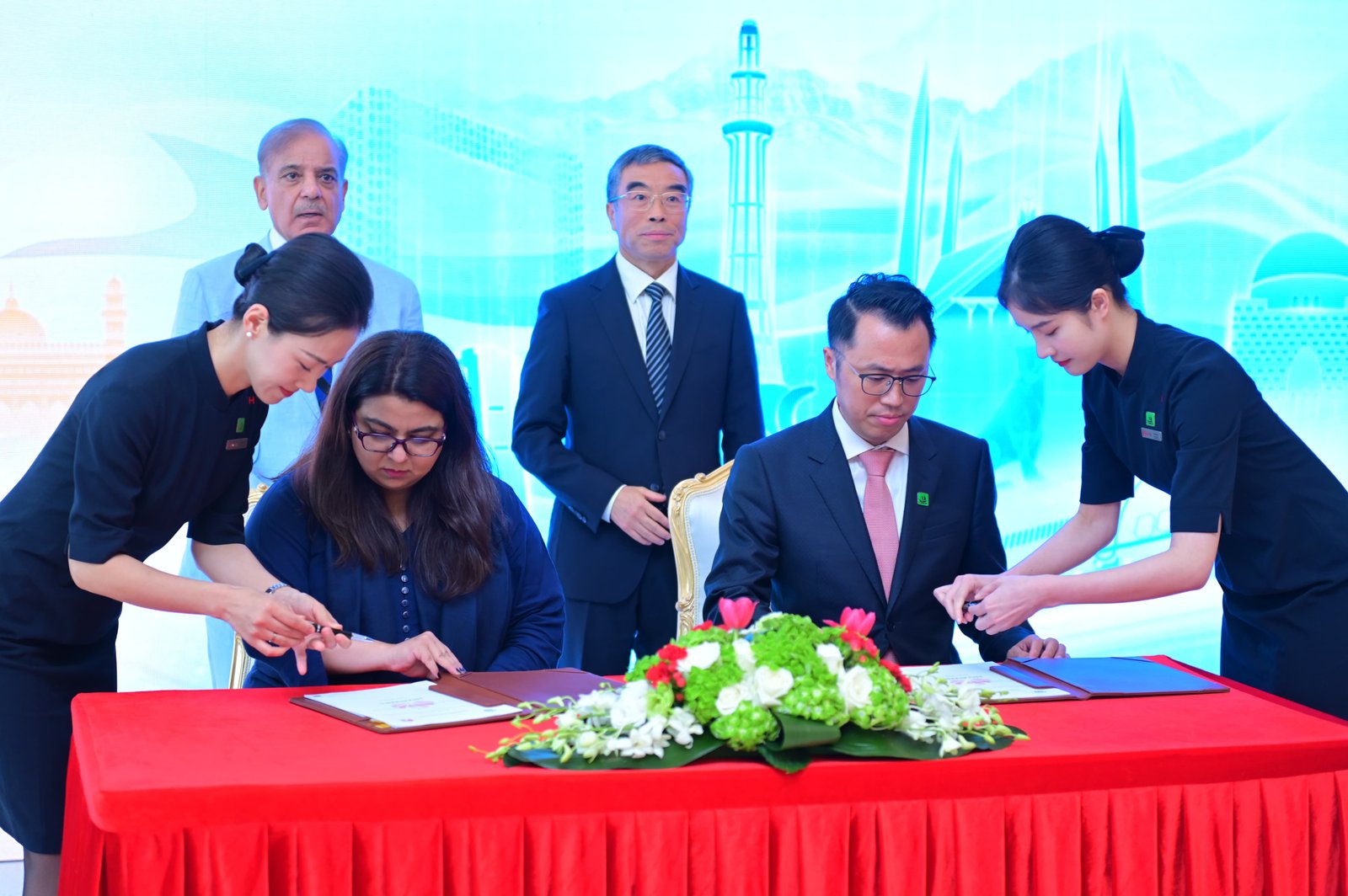
MoITT-Google MoU signed at PM House. Pakistan's first Chromebook assembly line launched at Haripur (500K-600K units/year).
December 2025 set an all-time monthly record of USD 437 million, up 26% year-on-year, crossing the USD 400M threshold for the first time.
Pakistan's first Asan Khidmat Markaz inaugurated in Islamabad's G-9 sector with 64 services from 12 institutions under one roof.
PM pledged USD 1 billion for AI by 2030. 1,000 fully funded AI PhD scholarships. Islamabad AI Declaration issued. Pakistan assumed DCO Council presidency in Kuwait.
480 MHz sold to Jazz, Ufone, and Zong for USD 509.6M. Total spectrum nearly tripled from 274 MHz to ~750 MHz. Commercial 5G live in 4 cities by July.
Chinese industrial-internet giant IBI established its Pakistan Digital Economy Headquarters. PM hosted 11-member delegation. 360 representatives from 200+ companies.
PM inaugurated Pakistan's largest purpose-built, AI-ready Tier III data-centre campus at 8.5 MW, built with ZTE. First sovereign AI compute capacity.
PM Shehbaz Sharif inaugurated Google's first office in Pakistan. Free Gemini subscriptions for all Pakistani students. Google aligned with PM's USD 30B IT export ambition.
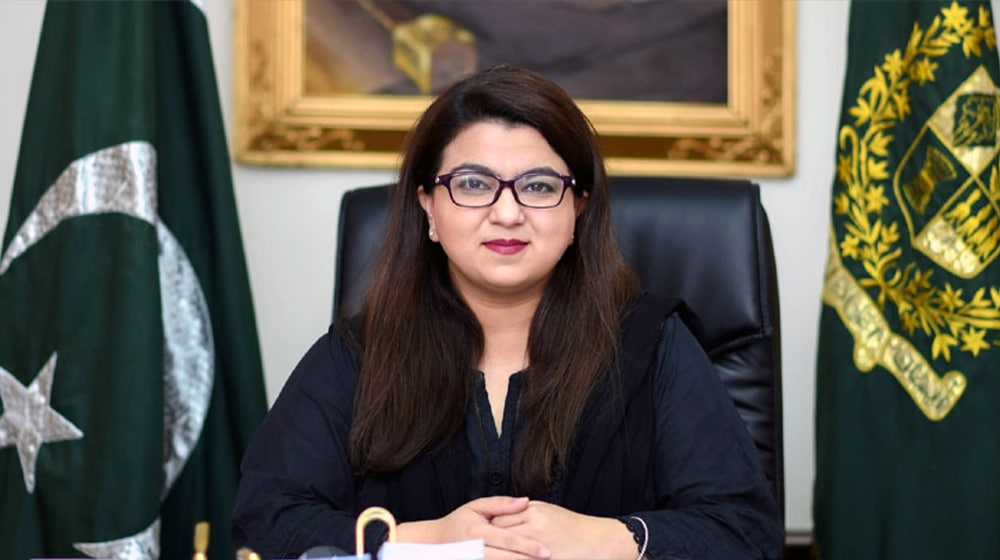
Federal Minister for IT & Telecommunication, Government of Pakistan
I am the Federal Minister for Information Technology & Telecommunication of the Islamic Republic of Pakistan. I entered the federal cabinet on 12 March 2024 as Minister of State, the only woman inducted into that cabinet, and on 27 February 2025 I was elevated to Federal Minister, again the only woman Federal Minister in the expanded cabinet, with the oath of office administered by the President of Pakistan and notified in the Gazette of Pakistan Extraordinary.
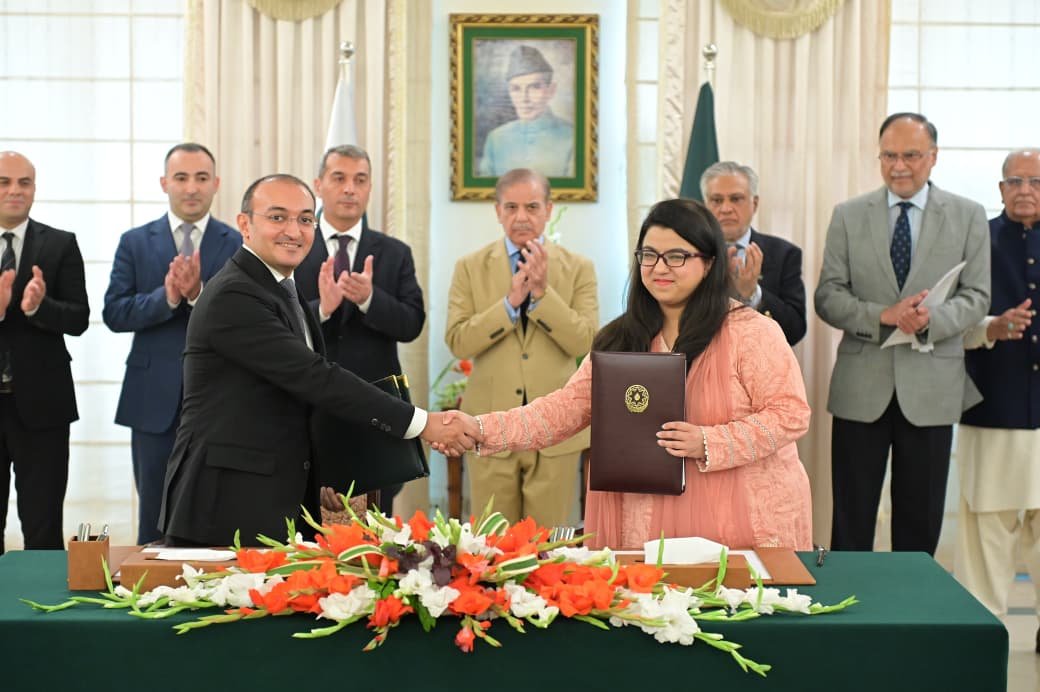
Educated at Lahore Grammar School and the Lahore University of Management Sciences (LUMS), I hold a Master's degree from the University of Warwick, United Kingdom, and served on the faculty of LUMS for six years before entering public life. I am a third-term Member of the National Assembly of Pakistan. Within the parliamentary community I served as Convener of the Pakistan-Azerbaijan Parliamentary Friendship Group, a relationship that later produced the Asan Khidmat public-service partnership between the two countries, and as General Secretary of the Young Parliamentarians Forum.
Before assuming the IT portfolio, I led nationwide youth and skills programming as Special Assistant to the Prime Minister on Youth Affairs and Chairperson of the PM Youth Programme, executed under the 4Es framework of Employment, Education, Engagement and Environment, and as Chief Coordinator for the PM's Skills Development Program, heading the nationwide arrangement to provide skills to youth in diverse disciplines based on national and international employment demand. That grounding in human capital now runs through my stewardship of the technology portfolio: DigiSkills, the Huawei and ZTE training partnerships, the semiconductor workforce initiative and the AI education push all carry the imprint of a minister who came to digital policy through the youth-development door.
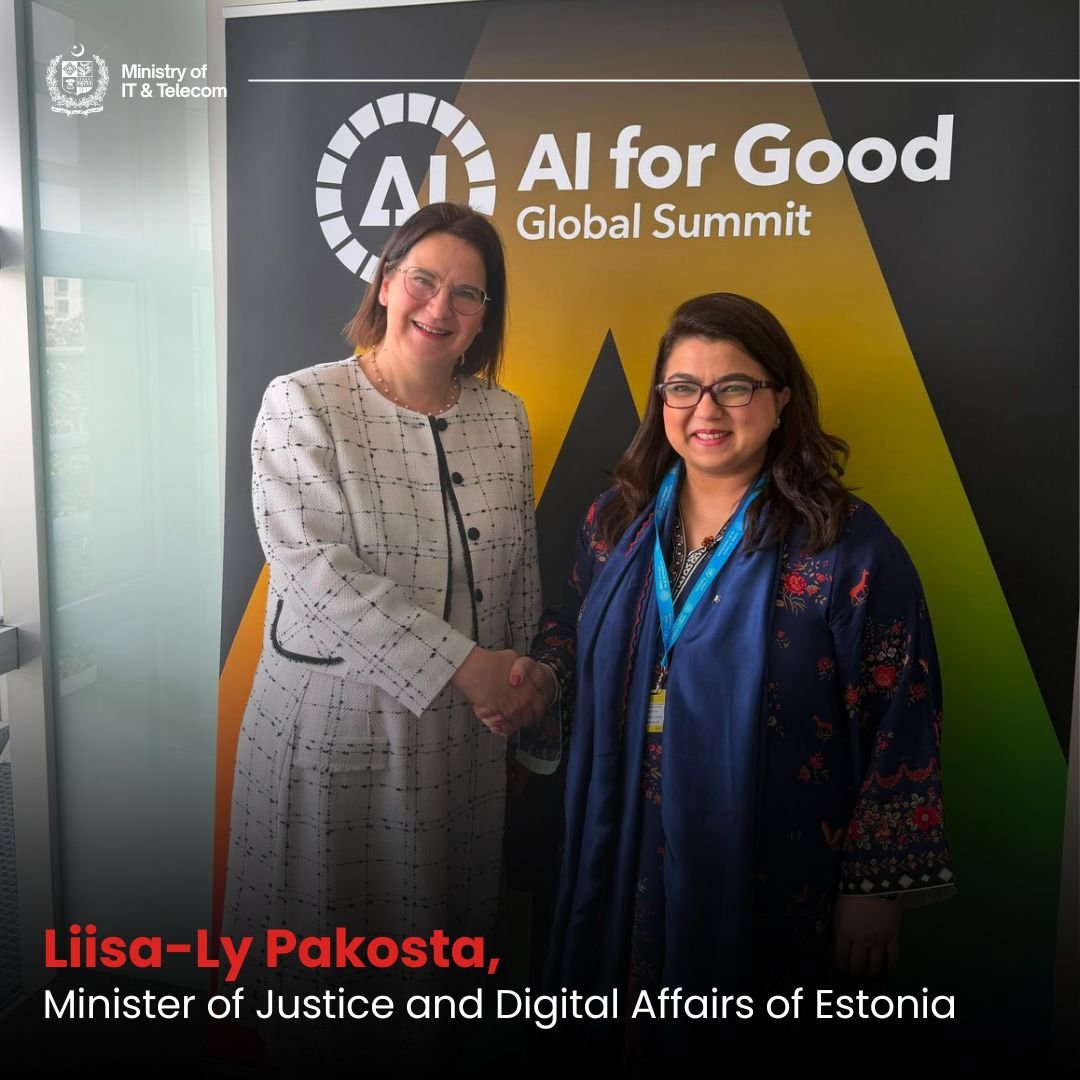
As Federal Minister, I am a core member of the Prime Minister's economic team, appearing alongside the Finance Minister and the economic leadership at the government's structural-reforms briefings, and I lead the country's IT export growth plan to reach USD 25 billion over the next five years. I have represented Pakistan at the World Economic Forum (Switzerland), GITEX Global (Dubai), LEAP (Riyadh), Mobile World Congress (Doha), WTDC-25 (Baku), AI for Good Global Summit and the inaugural Global Dialogue on AI Governance (Geneva), and the Digital Cooperation Organization, whose Council Presidency Pakistan assumed for 2026 under my stewardship. Through prioritizing digital governance and the international branding of the country's technology sector, I lead the Digital Pakistan and Techdestination Pakistan campaigns, while major reforms of the telecom and IT sectors are underway to attract FDI and to showcase Pakistan as the next tech destination in the global arena.
"2025 was the year of foundations. The record of the next thirty months is the story of those foundations being poured, and of the structure that rose on them."
Shaza Fatima Khawaja
A verified record of transformation: exports, connectivity, policy, skills, and inclusion from March 2024 to August 2026.
IT and ITeS exports reached an all-time high of USD 4.6 billion in FY2025-26, up 21% from USD 3.812B. December 2025 set a monthly record of USD 437M. The sector's USD 3.9 billion trade surplus was the highest among all services sectors.
Freelancer export earnings hit a record USD 1.76 billion in FY26, up 78%, with IT freelancers contributing more than USD 1.16B, up 49%. Pakistan counts more than 2.37 million freelancers, among the largest freelance workforces in the world.
The 10-12 March 2026 auction sold 480 MHz for USD 509.6M to Jazz, Ufone and Zong. Licences issued 19 March. Commercial 5G live in Islamabad, Rawalpindi, Lahore and Karachi by July 2026 with 108-135 Mbps average downloads.
Up 27 places in the ITU ICT Development Index 2026 (score 56.4 to 67.7). Tier 1 (Role-Modelling) in ITU Global Cybersecurity Index 2024 with 96.69/100. First-ever entry into the High tier of UN E-Government Development Index.
Pakistan's first comprehensive digital-transformation statute (Act No. I of 2025), passed by both Houses in January 2025, creating the PM-chaired National Digital Commission, the Pakistan Digital Authority, the Pakistan Stack and the National Data Exchange Layer.
Pakistan's first National AI Policy unanimously approved by the Federal Cabinet on 31 July 2025. Indus AI Week 2026 brought the PM's USD 1 billion AI-by-2030 pledge, 1,000 fully funded AI PhD scholarships and the Islamabad AI Declaration.
MoITT-Google MoU and the first Chromebook assembly line at Haripur (500K-600K units/yr). Google registration completed November 2025. First Google office in Pakistan inaugurated by the PM on 18 August 2026, with free Gemini subscriptions for all Pakistani students.
Pakistan became the first country to implement the WEF/DCO Digital FDI Initiative. The first Digital FDI Forum drew nearly USD 700M in pledges. Chinese IBI established its Pakistan Digital Economy HQ. Huawei committed to 300,000 ICT trainings, ZTE to 100,000 students.
More than 4.5 million free freelancing and digital-skills trainings delivered, including over 800,000 to women. DigiSkills 3.0 approved at Rs 1.79 billion with 25 courses and a 3 million training target. Programme freelancers have earned approximately USD 1.65 billion.
Total spectrum nearly tripled from 274 MHz to ~750 MHz. Pakistan became the first country in Asia to abolish Right-of-Way charges. Domestic internet connections rose from 1.9M to 5.1M. The 2Africa submarine cable landed in Karachi within a five-cable, 26.5 Tbps portfolio.
The world's fastest-closing mobile-internet gender digital divide: from 38% to 8% (GSMA 2026). Women's mobile-internet adoption up from 33% to 45%. 10 million free SIMs programme for women. 800,000 Ramazan digital wallets in one month, with another 900,000 women joining in 2026.
e-Office cut federal file processing from 25 days to ~4 days across 42 federal departments, with potential savings of Rs 9.5 billion/year. Pakistan's first Asan Khidmat Markaz inaugurated on 15 January 2026 with 64 services from 12 institutions under one roof.
The auditable, month-by-month export record: time series, freelancer economy, PSEB machinery, incubation, startup finance and the fiscal framework.
ICT exports stood at USD 3.223B in FY2023-24, rising to a record USD 3.812B in FY2024-25 (+18.27%), then breaking the record again at USD 4.6B in FY2025-26 (+21%). IT is now the third-largest foreign-exchange earner after textiles and rice, and roughly 11.7% of total exports. The ICT trade surplus of USD 3.98B is the highest among all services sectors. Pakistan Economic Survey records ICT remittances grew at a 16% CAGR over five years.
October 2025 set a then-record USD 386M. December 2025 crossed USD 400M for the first time in history at USD 437M (+26% YoY). March 2026: USD 413M. April 2026: USD 423M (+33%). July 2026 opened the new fiscal year at USD 417M (+18%), with an 83% sectoral trade surplus. Tech exports carry an 85-86% trade surplus, an unmatched yield in Pakistan's trade account.
Freelancer exports hit USD 1.76B in FY26 (+78%), IT freelancers contributing USD 1.16B (+49%), non-IT freelancers USD 592M (+188%). Five years earlier the entire figure was USD 396M. DigiSkills-trained freelancers earned USD 1.65B. Pakistan counts 2.37M+ freelancers (ADB), industry estimates near 3M. The 2026 Global Outsourcing Talent Index ranks Pakistan 16th of 193 countries.
Leads the twin national branding campaigns, Digital Pakistan and Techdestination Pakistan, spanning 30+ technology sectors. At GITEX Global 2024, Pakistan fielded 200+ companies and was named Tech Destination of the Year, generating USD 10.5M in business leads. GITEX 2025: 26-company Tech Destination Pavilion under "Think Tech, Think Pakistan." Every dollar spent returned USD 50 in business commitments.
PSEB participated in 20 major international tech events (GITEX, LEAP, London Tech Week, Web Summit Qatar, GDC) in FY26's first 9 months. 300+ firms showcased, 4,228 qualified B2B leads generated, USD 73.89M in reported business, 2B+ media impressions. IT/ITeS companies registered with SECP: 34,420 (20,711 with PSEB). The 0.25% final tax regime on IT exports continued through June 2029; advance tax on foreign payments cut from 5% to 0.5%.
8 NICs across Islamabad, Karachi, Lahore, Peshawar, Faisalabad, Hyderabad, Rawalpindi (NICAT, aerospace) and Quetta, with Sialkot signed June 2026. Cumulative record: 1,900+ startups incubated, 960+ graduated, 185,000+ jobs generated, Rs 30.8B investment raised, revenues exceeding Rs 27.3B. 12,000+ women entrepreneurs empowered, at least 25% of each cohort reserved for women. NIC Karachi alone: 375+ startups, PKR 10B revenue.
Triple launch (31 October 2025): Pakistan Startup Fund (equity-free grants, USD 50K-1M), PM's Cloud Enablement Programme (AWS, Google Cloud, Azure, Huawei Cloud credits), and BridgeStart (Rs 1B budget, 13 startups sent to international accelerators). Startup-fund architecture credited with helping fintech investment rise from USD 12.5M (2023) to USD 52.5M (H1 2025).
National network of co-working and training centres: 40 established in FY25, 47 new in FY26, expanding to 250 by February 2027. Provincial allocation: Punjab 149, Sindh 51, KP 28, Islamabad 11, Balochistan 6, AJK 3, GB 2. Co-working space for 25,000+ freelancers, projected USD 25M annual export contribution. Interest-free loans up to Rs 10M through partner banks, government covering half of trainers' costs.
Budget 2026-27 allocates Rs 19.58B to IT-sector projects, designed with 100% focus on youth. Telecom revenues crossed Rs 1 trillion for the first time (FY25, Rs 1,075B, +12%), contributing Rs 402B to the exchequer. Sector investment up 9% to USD 838M, telecom FDI doubled to USD 97M. 207.22M subscribers, 160.9M broadband users, 64.2% broadband penetration (vs. 32.6% in 2019).
Strategic alliances forged with the world's leading technology companies, from boardrooms to factory floors.
Pakistan's first comprehensive digital-transformation statute, its first AI policy, its first semiconductor programme, and its first full CERT architecture.
Act No. I of 2025. Cabinet approval June 2024; laid in National Assembly 16 December 2024; passed by both Houses by 28 January 2025; presidential assent and gazettal 29 January. Creates the National Digital Commission (PM-chaired, all Chief Ministers), the Pakistan Digital Authority (Dr Sohail Munir as Chairperson, Dr Muhammad J. Sear as Member, five-year contracts, stood up August 2025), and the Pakistan Stack (digital identity, payments, data exchange). The National Data Exchange Layer (NADRA-MoITT) went to pilot in December 2025. PM directed National Digital Commission meeting (29 July 2026), ordered Sky47 National Central Data Center rollout, approved first-phase digital reforms covering health, agriculture, utilities, housing and SMEs with 14 more sectors in pipeline. BIS study cited: USD 40B impact for Pakistan's USD 400B economy.
Unanimously approved 31 July 2025. Six strategic pillars: AI Innovation Ecosystem (National AI Fund, geographically distributed Centres of Excellence), Awareness & Readiness (200,000 trained annually, 3,000 scholarships, 20,000 paid internships), Secure & Trustworthy AI (regulatory sandboxes, cybersecurity protocols), Transformation & Evolution (sector roadmaps for education, health, agriculture, governance), AI Infrastructure (national compute grid, centralized datasets, AI hubs), and International Partnerships. Headline targets: 1M AI professionals by 2030, AI Innovation & Venture Funds, 50,000 AI civic projects, 1,000 local AI products, 1,000 research projects, 10,000 new trainers by 2027, dedicated inclusion of women and differently-abled, and a national large language model. AI Council chaired by Federal IT Minister. Described as "groundbreaking and revolutionary" in National Assembly (5 March 2026).
Semiconductor Policy and Action Plan public by November 2024, envisioning Rs 10 billion National Semiconductor Fund and Special Technology Zone incentives. CDWP approved NSHRDP Phase-I at Rs 4.844 billion (April 2025). INSPIRE launched 21 October 2025: 7,200 professionals in chip design, verification and research over five years through 9 public-sector university clusters and IC laboratories, MoITT-led and PSEB-executed. Synchronized with Saudi Arabia's National Semiconductor Hub and NTDP. Phased doctrine: chip design, education and OSAT development before capital-intensive fabrication. Cadence EDA tools procured. Up-Skilling Training Programme awarded to GIKI and NED (April 2026): four-month Digital Design & Verification course for 675 students, building on pilot that upskilled 54. Target: indigenous design, testing and fabrication capability by 2047.
National CERT fully operational under CERT Rules 2023 (three-tier system: National, Sectoral, Organizational). Pakistan attained Tier-1 status in ITU Global Cybersecurity Index (96.69/100). Draft National Cyber Security Act in progress, establishing Pakistan's first National Cybersecurity Authority. PKCERT-Kaspersky MoU on threat intelligence. Critical Information Infrastructure designations for NADRA, FBR and telecom under PECA. National Cyber Crime Investigation Agency established. World Bank's Digital Economy Enhancement Project supporting implementation.
Received cabinet in-principle approval in 2023. In January 2025, MoITT told the Senate IT Committee the Bill would be re-approved in principle. A fresh draft, the Personal Data Protection Act 2025, was circulated in early 2025 with breach-notification provisions. As of a World Bank assessment (January 2026), the Bill remained in transition and pending legislative approval. Addresses data privacy and breach notification gaps in Pakistan's legal framework.
The Pakistan Cloud First Policy (February 2022) was adopted across all provinces, AJK and GB during this tenure by May 2025, creating the regulatory basis for sovereign-cloud and data-centre investments. On 13 November 2025, with the Asian Development Bank, MoITT unveiled the Pakistan Digital Sector Roadmap, a ten-year programme on four pillars: connected, competitive, future-ready Pakistan where technology drives inclusive growth.
An auction a decade in waiting, a pricing reform no other Asian country had attempted, and a cable portfolio that repositioned Pakistan on the global bandwidth map.
The 10-12 March 2026 auction, conducted with NERA Economic Consulting and broadcast live on PM's instruction. Of 597.2 MHz offered across six bands, 480 MHz sold: Jazz (190 MHz), Ufone (180 MHz), Zong (110 MHz). Licences granted 19 March 2026. Licence conditions: minimum 4G speeds rise from 4 to 20 Mbps (50 Mbps by 2030-35), 5G starts near 50 Mbps rising to 100 Mbps, latency capped at 35ms, 1,000 new sites/year for 9 years (including 200/year in underserved areas), fibre-to-site ratio 20% to 35%. Commercial 5G live in Islamabad, Rawalpindi, Lahore and Karachi by mid-July 2026 with 108-135 Mbps average downloads and 3.81M 5G-ready handsets. Separate AJK and GB auctions scheduled.
On one directive from the PM, Pakistan became a Right-of-Way charge-free country, the first in Asia. Fibre crossing fees of Rs 36,000 per kilometre abolished. National Highway Authority and Pakistan Railways waived their fibre fees. AJK followed with a one-window NOC carrying 15-day deemed approval. On 11 June 2026 the National Assembly passed the Telecommunication (Re-organisation) (Amendment) Bill 2026, codifying the RoW regime in Sections 27A and 27B. An infrastructure-sharing framework for telecom operators was approved in November 2025.
Fibre-to-the-home household passes grew from ~3M to 5M+, with a target of 10M wired-broadband households within 3 years. 12,000+ sites installed or upgraded over five years. National Fiberization Plan (World Bank Digital Economy Enhancement Project) targets 8-10M new house passes, 80% tower fiberization by 2029, minimum 100 Mbps fixed-broadband standard, and a top-50 Ookla ranking. National Connectivity Plan and Connect 2030 vision add 100 Mbps nationwide minimum, 1,000 MHz of spectrum and a cashless economy. Only 16% of towers fiberized currently; target 60% in 3 years.
The 2Africa submarine cable (world's largest at 45,000 km) landed at Hawksbay, Karachi (December 2024, Transworld Associates). Five-cable portfolio: AFRICA-1 (PTCL, 6.5 Tbps), SMW6 (Transworld, 6 Tbps), 2AFRICA (Transworld, 10 Tbps), PEACE (2 Tbps), MGG-1 Makran Gulf Gateway (Cybernet, 2 Tbps). Economic Survey records 6 submarine systems + 1 terrestrial link at 17.7 Tbps installed, with 4 further cables planned. Pakistan-China 820 km optical-fibre link (Khunjerab to Rawalpindi) operationalised for data transit. PakSat-MM1 operational September 2024, Kacific partnership for 11 Ka-band spot beams. Satellite licensing: 5 operators in queue.
Broadband deployed in 21,600+ mauzas. 4,400+ telecom sites contracted (4,100+ deployed). 17,200 km of optical-fibre cable across 1,000+ towns. The 101st board (Dec 2025) approved 9 projects worth Rs 13.05B in a single sitting covering 5.55M people in 178 towns, 753 mauzas, 11 districts. Jan 2026: 4 Jazz contracts (Rs 1.16B, 9 districts). Legacy: PKR 95.27B across 107 broadband projects, PKR 41.43B for 19,169 km of fibre including 2,585 km of motorways. Outgoing board: 25 projects, PKR 30.8B, 2.8M lives. Balochistan: 31 of 31 projects completed, 4.27M people connected.
Smart Village at Roras inaugurated December 2024, anchored on a girls' high school, first in Asia-Pacific under the ITU Smart Village model. e-Rozgar announced at National Youth Convocation (20 August 2024): national network of co-working and training centres distributed by provincial population. 40 centres established in FY25, 47 new in FY26, expanding to 250 by February 2027 under PSEB phased plan. Provincial allocation: Punjab 149, Sindh 51, KP 28, Islamabad 11, Balochistan 6, AJK 3, GB 2. Interest-free loans up to Rs 10M through partner banks, government covering half of trainers' costs, EPADS portal for applications.
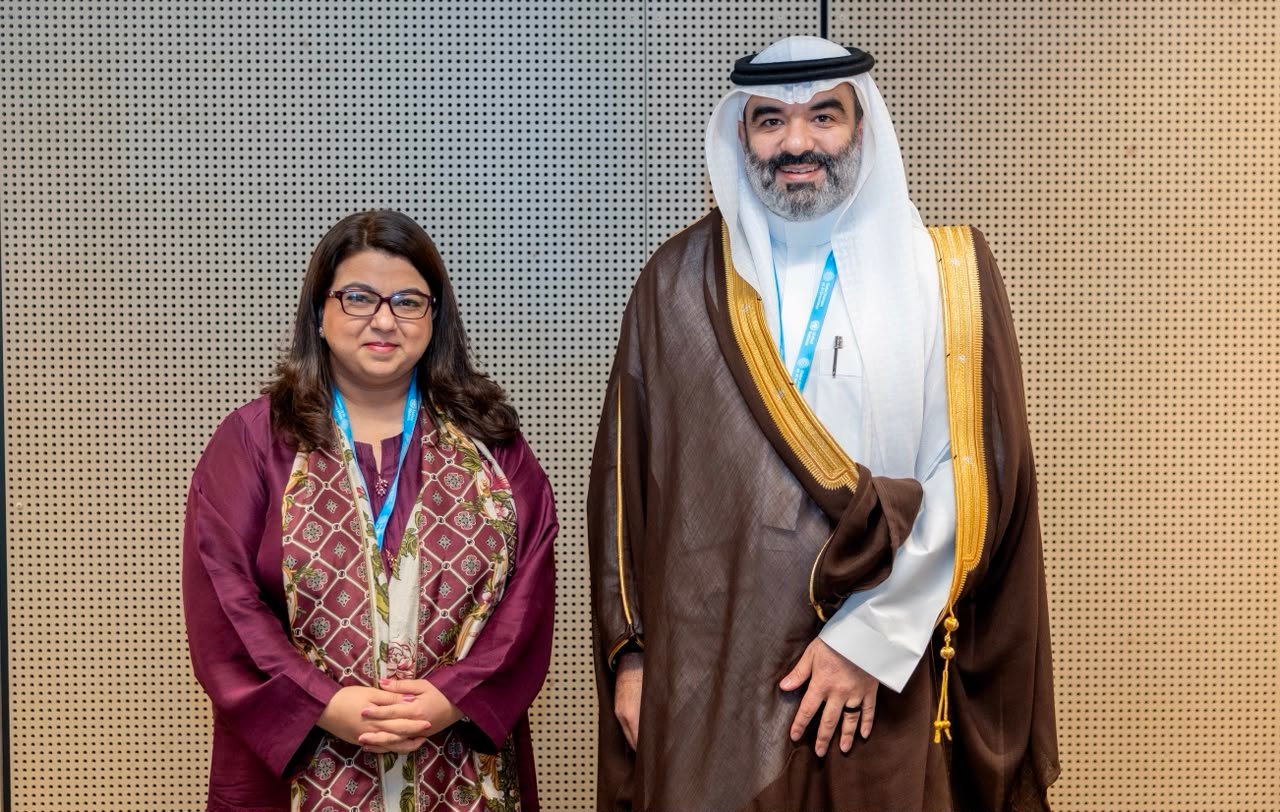
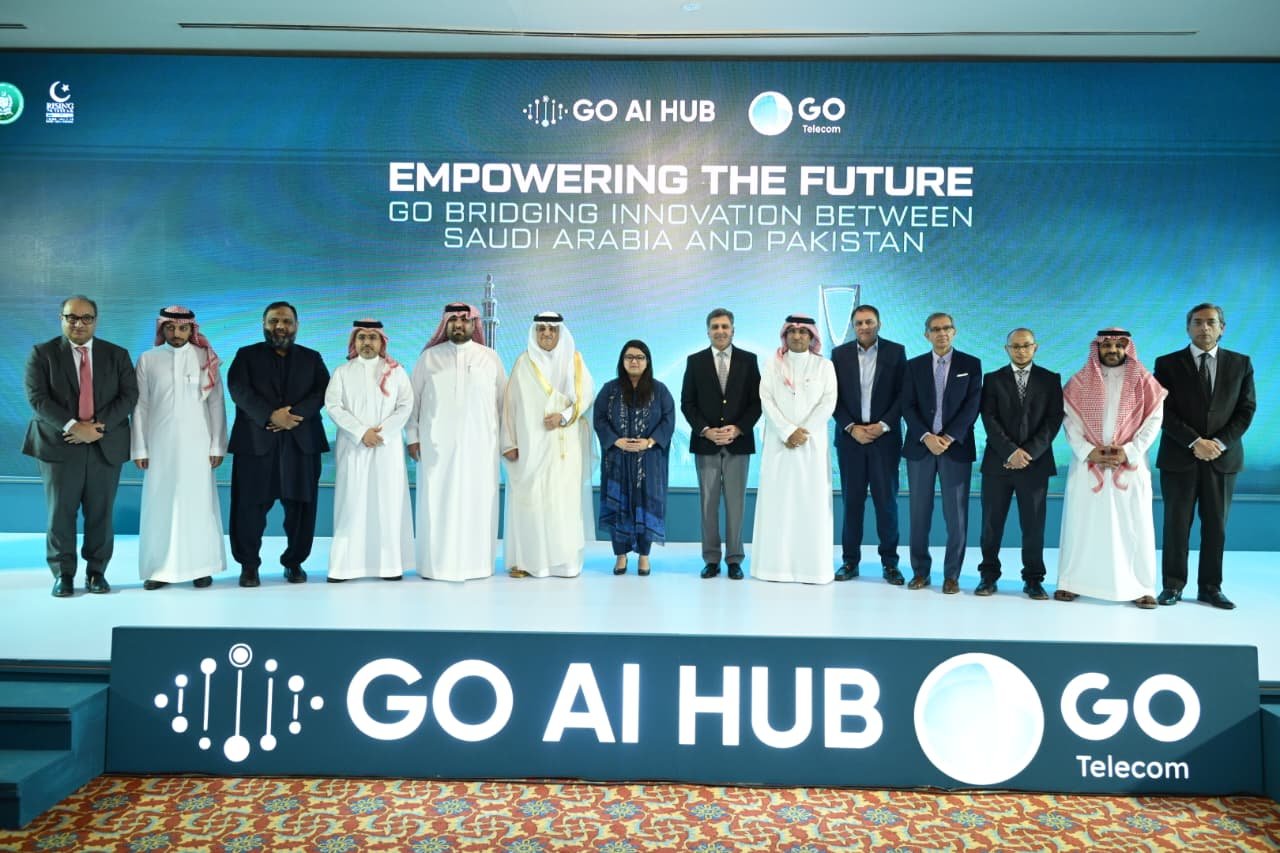
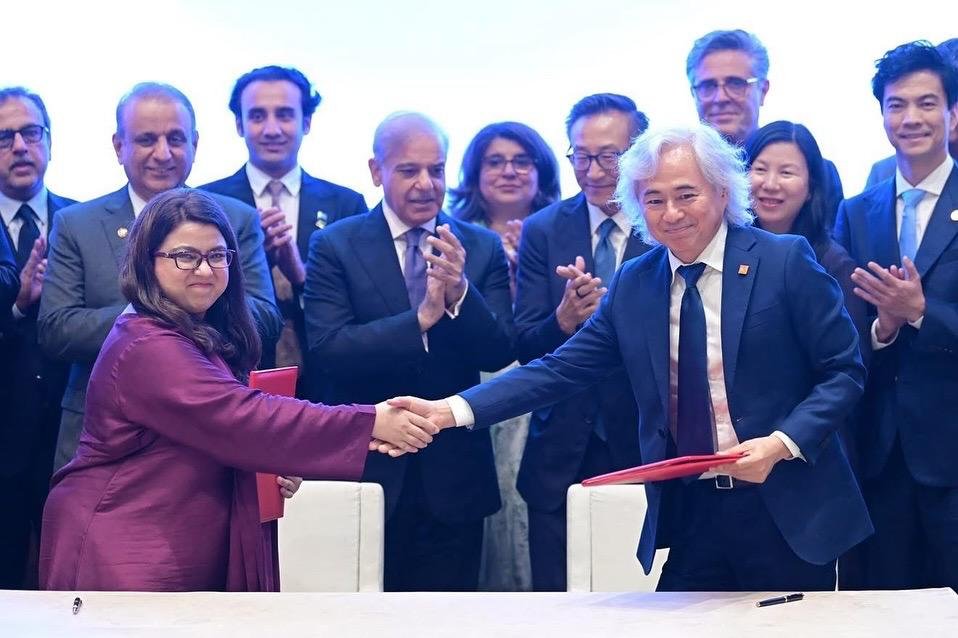
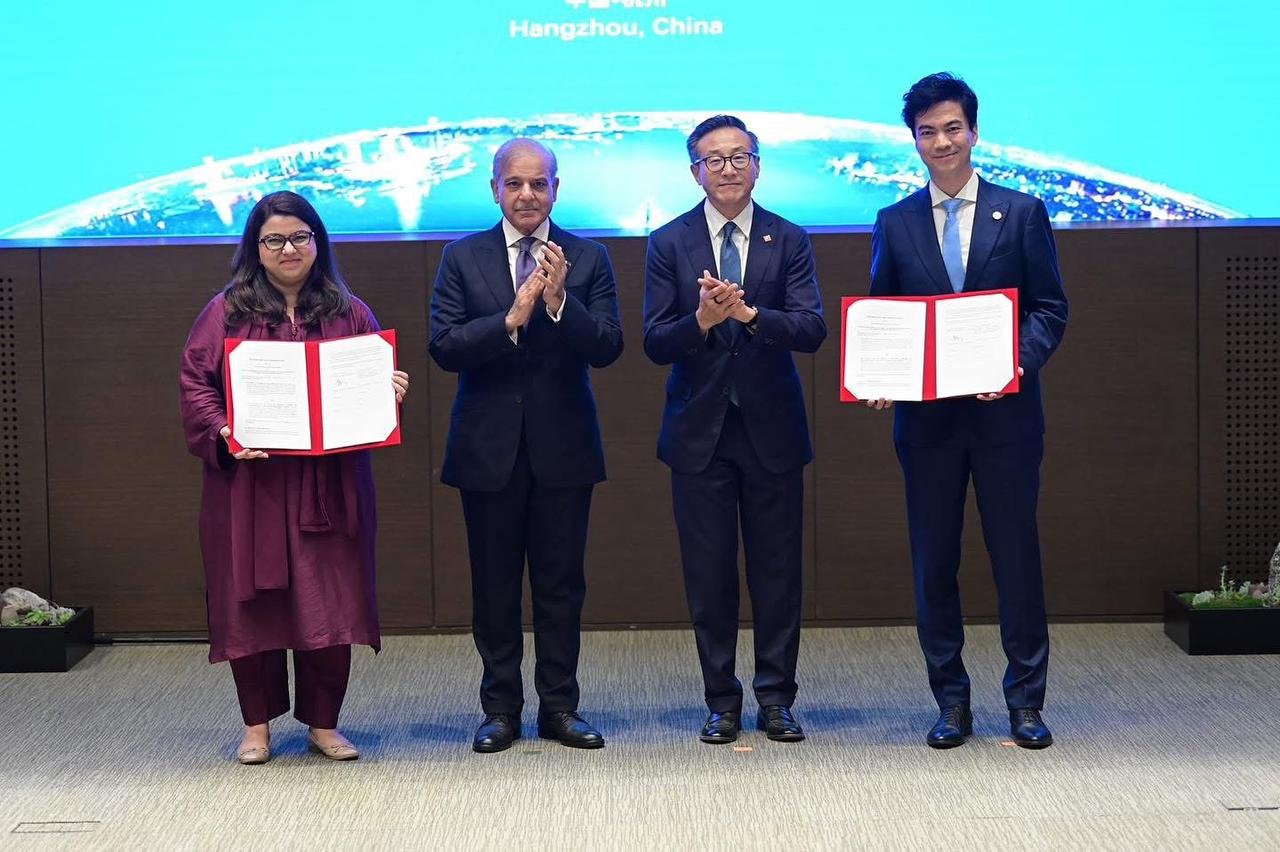
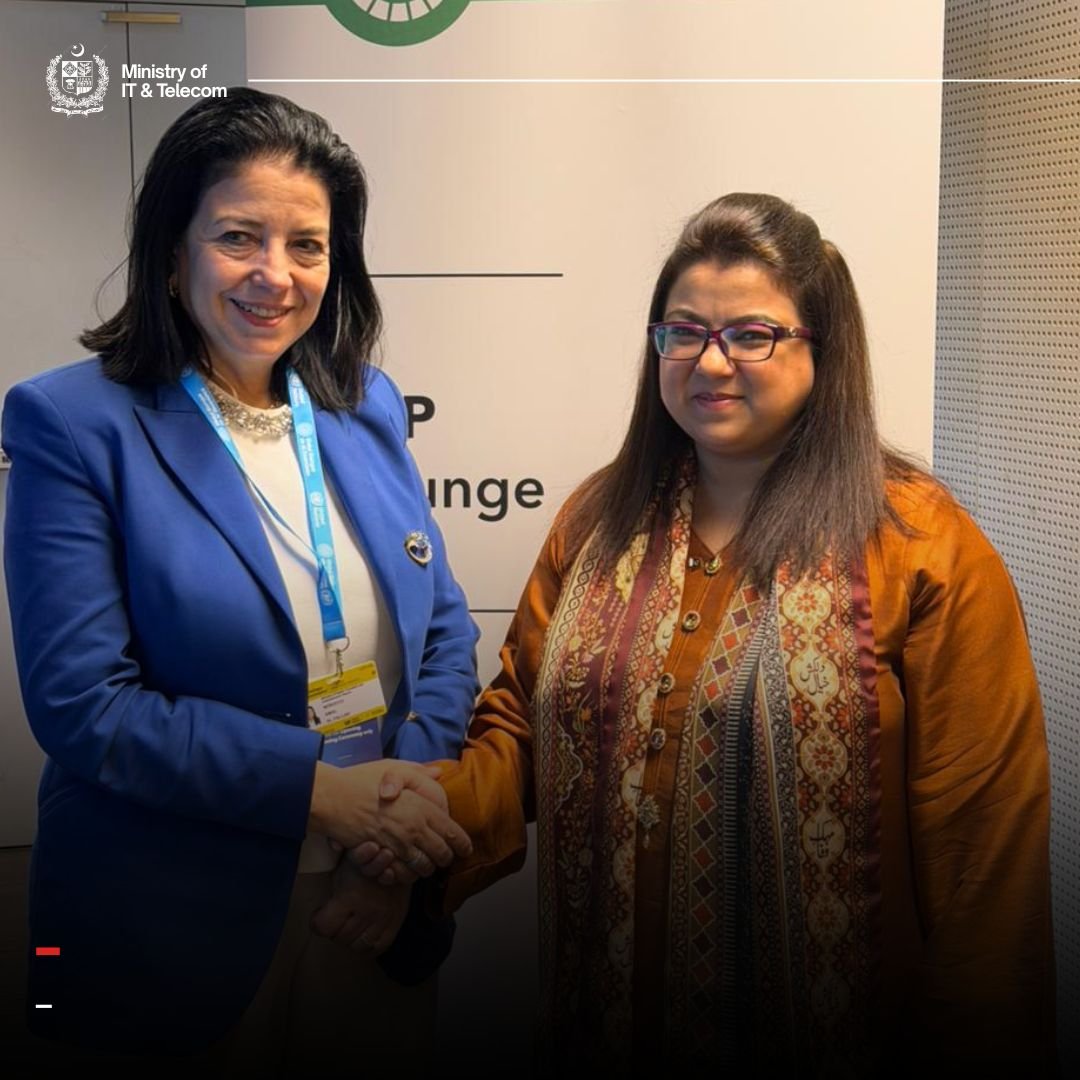
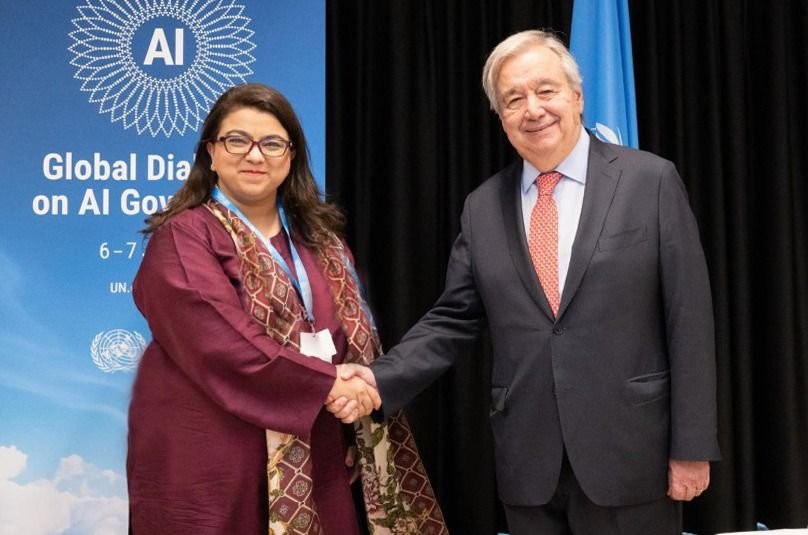
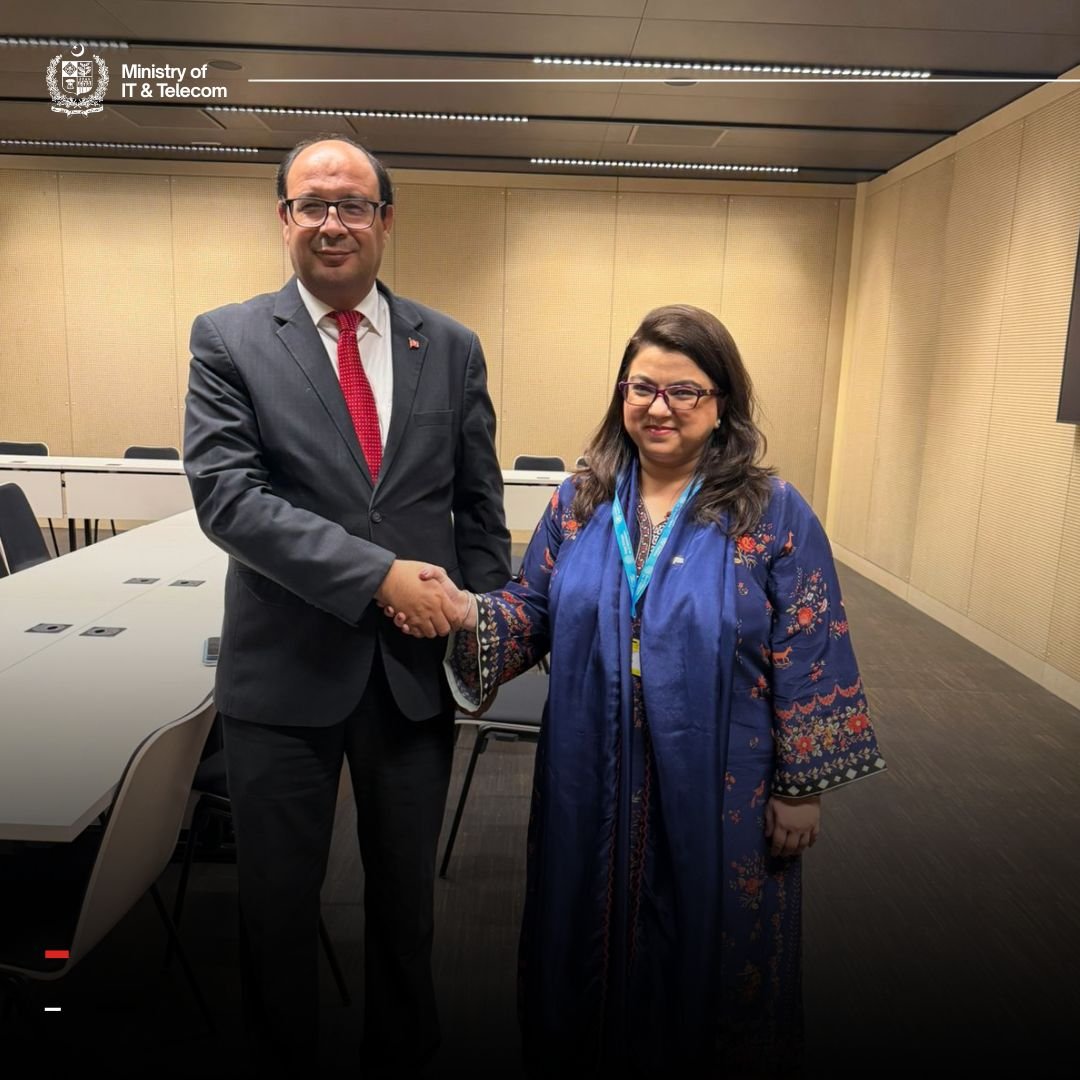
Photos from official engagements, keynotes, and global events.
I'd love to hear from you. Reach out through any of the channels below.